



News & Insights
Lighting for Life: What Treetops Hospice Taught Us About Human-Centric Buildings.
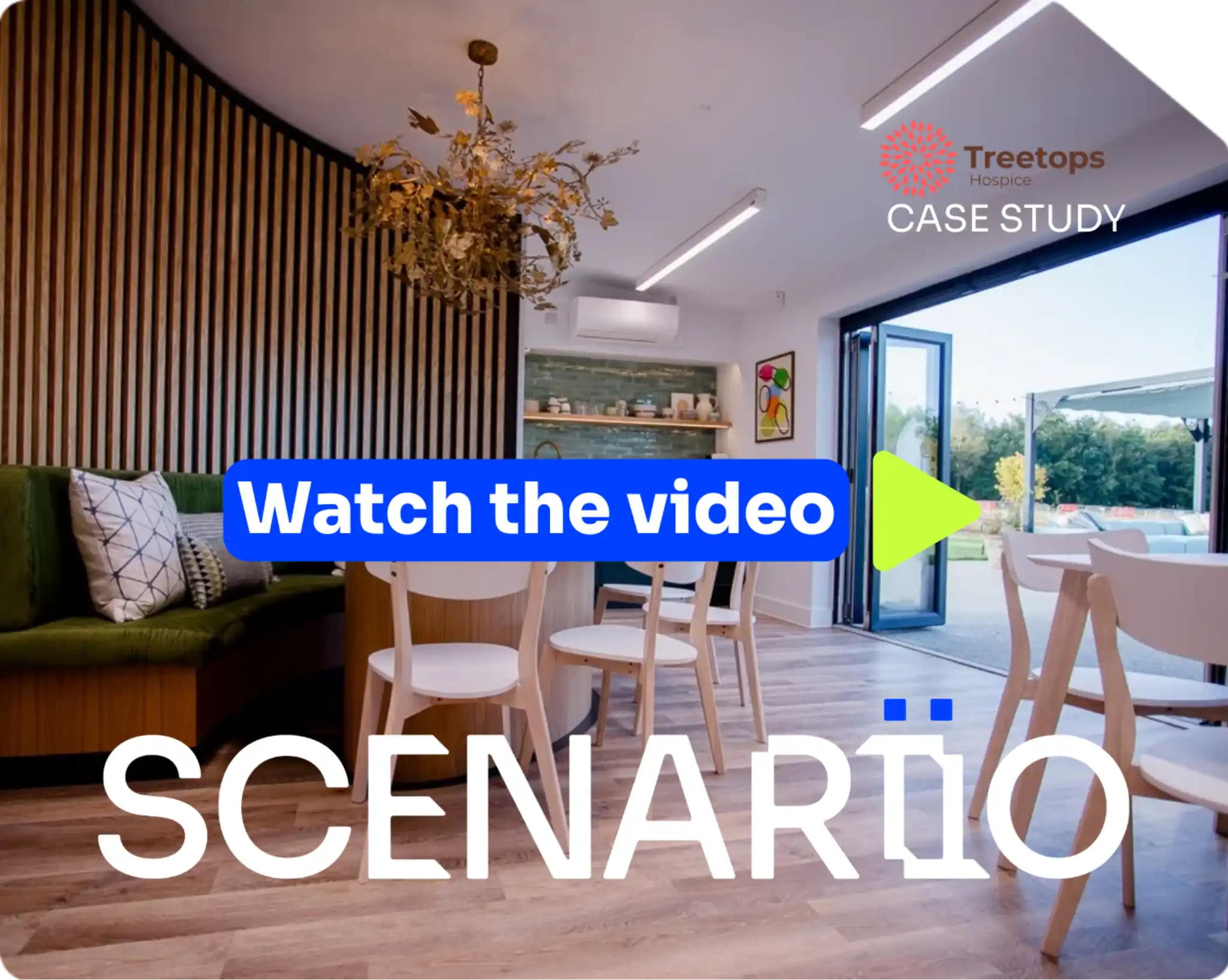
In 2023, Treetops Hospice in Derbyshire became part of a BBC DIY SOS project that brought together companies from across the UK with a shared purpose: to create a space that genuinely supports the people inside it.
Published
Wednesday, 3rd September 2025
Category
News & Insights
TAGS
Insights
Scenariio worked alongside wtec to deliver a smart, human-centric lighting system at Saplings House, the hospice’s dedicated area for bereaved children.
What began as a contribution to a charitable project became a powerful demonstration of how intelligent environments can directly influence wellbeing. And the lessons extend far beyond healthcare.
Serving Patients Through Better Light and Air
In a hospice environment, small details have a profound impact. The atmosphere of a room can affect stress levels, mood and overall comfort for both patients and staff.
Light plays a direct role in human health, mood and performance. Its impact is relevant anywhere people spend time indoors. Melatonin, cortisol and serotonin all respond to the light we are exposed to, influencing alertness, energy and emotional state.
In the early 2000s, scientists discovered specialised light-sensitive cells in the eye that send information to the suprachiasmatic nucleus, the brain’s “master clock” that regulates daily rhythms across the body. This breakthrough laid the foundation for Human-Centric Lighting, which supports natural circadian rhythms rather than working against them.
At Treetops, the lighting adapts throughout the day:
- Brighter, blue-enriched light in the morning to promote alertness.
- Warmer light later in the day to encourage rest.
- Stable, flicker-free illumination to reduce the likelihood of headaches and migraines.
Staff can adjust lighting scenes via a mobile app to suit individual needs or sensitive situations, ensuring the environment remains calm and supportive.
Air quality is monitored in parallel. Sensors embedded in each luminaire measure CO₂, particulate matter, temperature, humidity and VOC levels. Research from Harvard University has shown that elevated CO₂ can impair concentration and decision-making. At Treetops, if CO₂ levels rise, the system signals ventilation automatically. The technology operates quietly in the background, maintaining a healthy environment without disrupting care.
At the heart of the installation is the wtec smartengine, an intelligent remote driver delivering low-voltage power and control over PoE cabling. It creates a mesh sensor network across the building, feeding real-time data into the Building Management System so that HVAC and lighting respond dynamically without manual intervention.
What This Means Beyond Healthcare
While the project was rooted in hospice care, the challenges it addressed are not unique to healthcare.
Poor lighting remains one of the most common workplace complaints. Many offices, warehouses and schools operate in windowless or poorly daylit environments. The symptoms are familiar:
- Frequent headaches or eyestrain.
- Harsh glare or visible flicker.
- Afternoon energy crashes.
- Low mood during darker months.
- Gloomy spaces that never feel comfortable.
- Teams relocating to find better light.
These are often accepted as part of working life. In reality, they are signs that the environment is not aligned with human biology.
Lighting that remains the same intensity and colour throughout the day ignores how our bodies naturally respond to light. Combined with poor ventilation, it can leave people fatigued, disengaged and less productive.
From Smart Lighting to Intelligent Buildings
The technology installed at Treetops does not stop at lighting.
Through Insiight, Scenariio’s Smart Building IoT platform, lighting, air quality, energy use and asset data are unified into a single, live view of building performance. This removes the silos common in traditional systems and gives facilities teams clear, actionable insights.
Instead of reactive maintenance and guesswork, organisations gain:
- Real-time visibility of occupancy and utilisation.
- Evidence-based decisions on energy optimisation.
- Clear reporting to support sustainability targets.
- A low-voltage, digitally managed infrastructure that reduces reliance on traditional electrical reconfiguration.
The result is a building that actively supports wellbeing while also lowering operating costs and environmental impact.
A Broader Lesson
The Treetops Hospice project demonstrated something simple but powerful: when buildings are designed around people rather than systems, both wellbeing and performance improve.
Human-Centric Lighting is no longer a niche healthcare concept. It is a practical, scalable approach for any organisation that wants to create healthier, more productive and more sustainable spaces.
If your workplace struggles with glare, fatigue, energy waste or a lack of usable building data, it may not be the people who need adjusting, it may be the environment. With the right infrastructure, your building can do more than function. It can actively contribute to the wellbeing and performance of everyone inside it.