


Derby College Business Centre: how smart building design shaped behaviour over time.
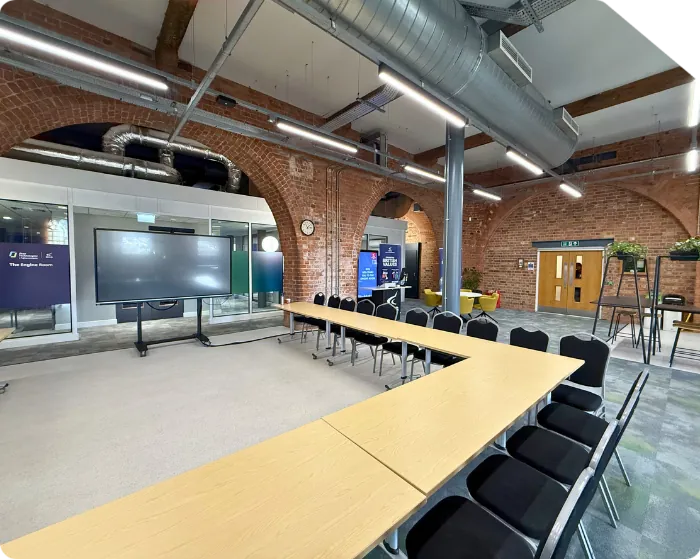
Two years after the Engine Room opened at Derby College Group, the technology installed as part of the project continues to operate quietly in the background, supporting day-to-day activity without drawing attention to itself.
Looking back: why longevity matters in smart buildings for education environments.
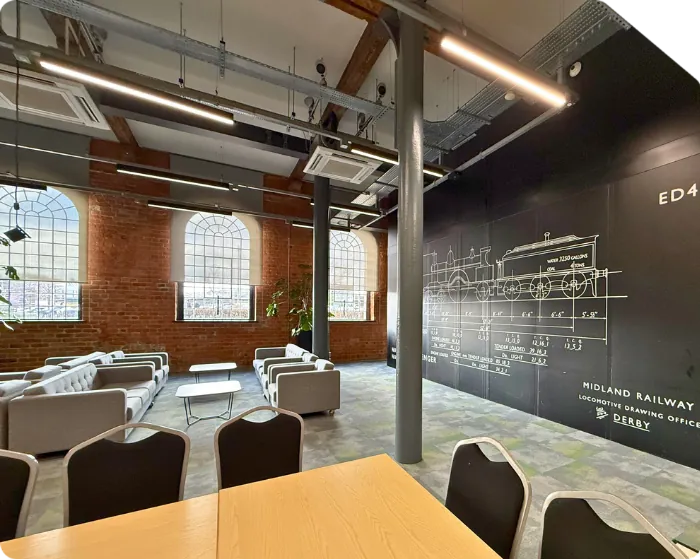
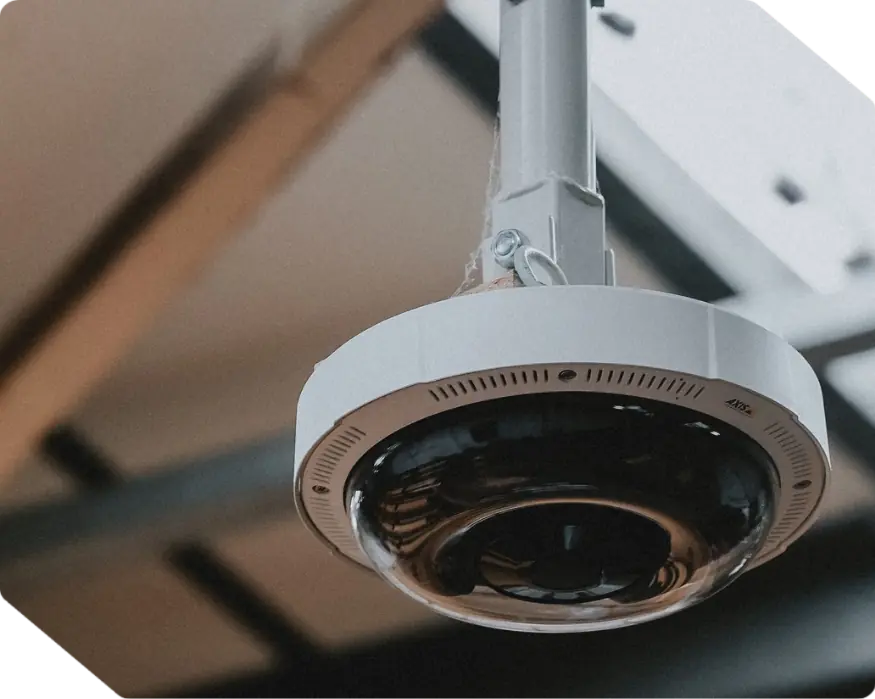
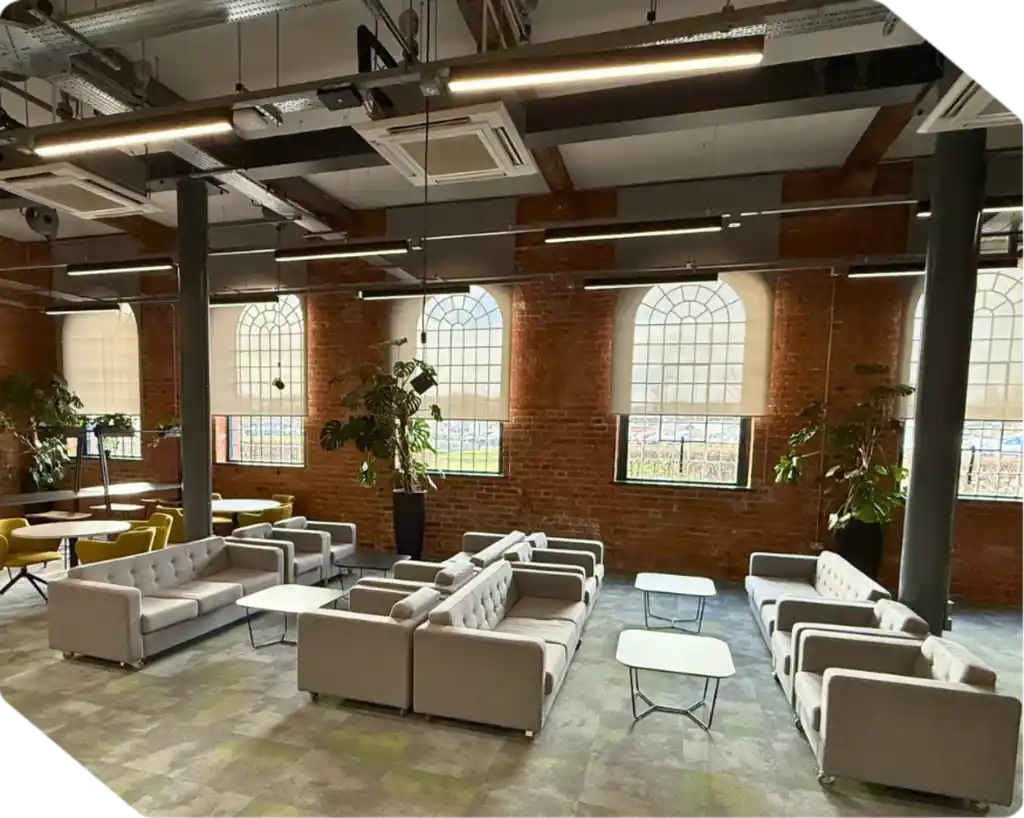
Lighting adjusts automatically throughout the day, meeting spaces continue to support hybrid collaboration across campuses, and sensors capture data on how the space is actually used – all as part of the fabric of the building rather than as visible systems.
What has changed most over that time is not the technology itself, but how people behave within the space.
From the outset, the Engine Room was designed as an investment in infrastructure rather than a short-term upgrade. The ambition was to create a business centre that would remain relevant as ways of working evolved, without requiring constant reinvention.
As Ian McCormick, IT Director at Derby College Group reflects:
“You’ve got to look at this as investing in the infrastructure of the building.
Not spending money on consumable things, but something that gives longevity.”
Two years on, that approach has proven its value.
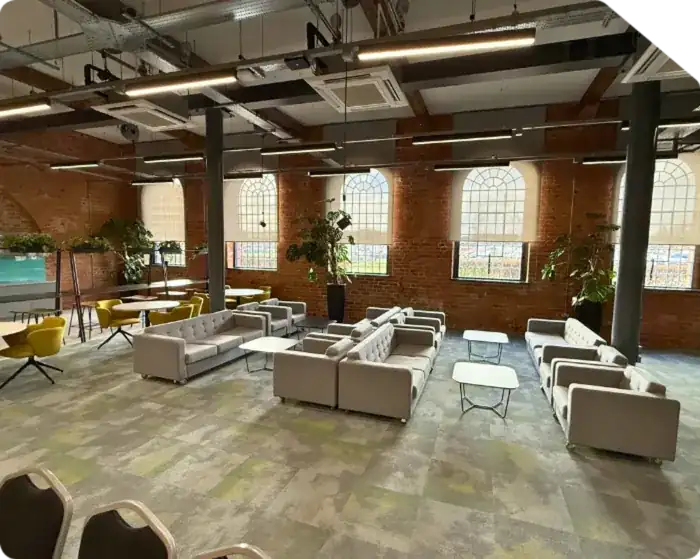
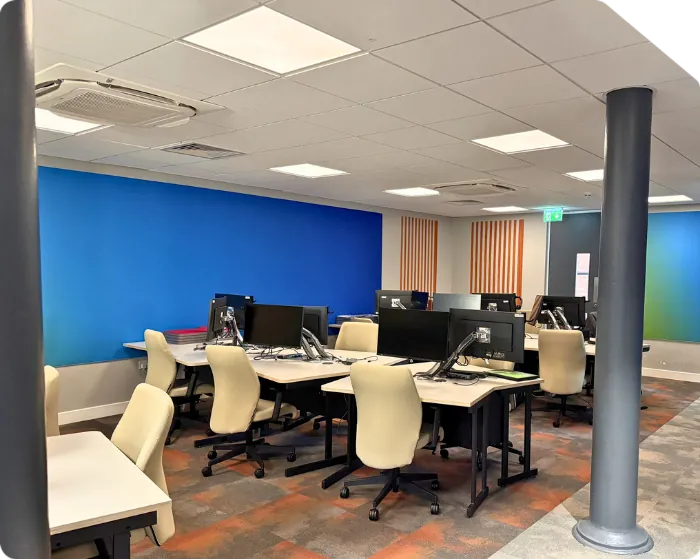
From installation to adoption: when smart building technology becomes invisible in everyday use.
One of the clearest indicators of success is how little users now think about the technology itself.
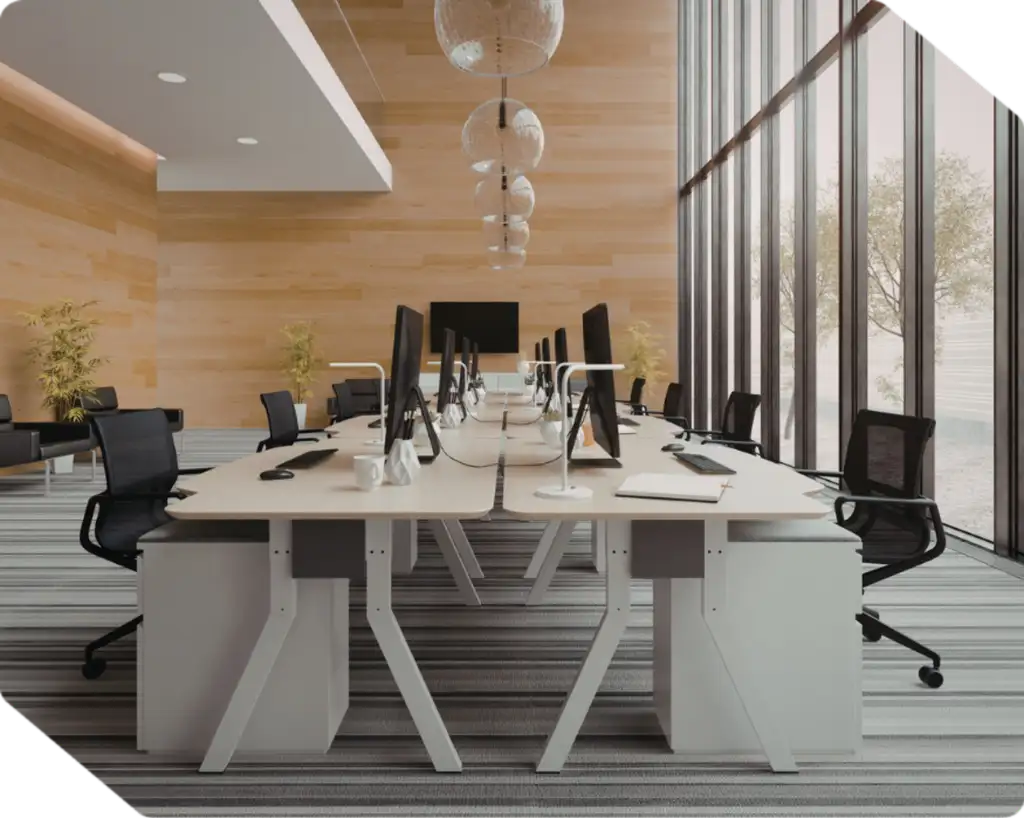
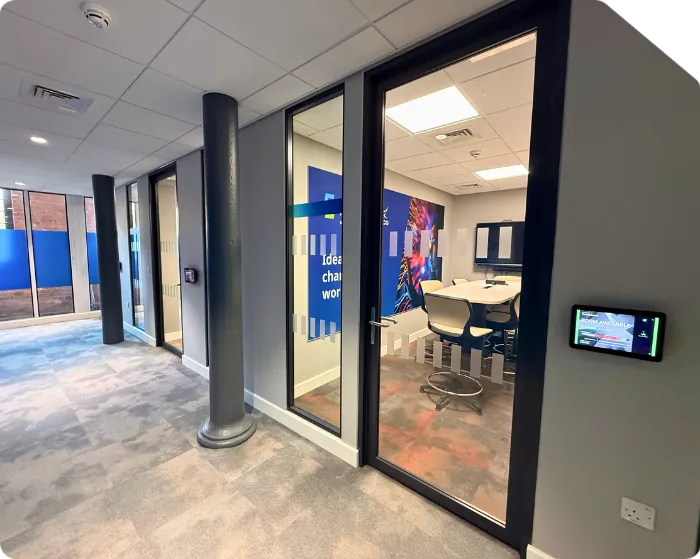
Lighting responds naturally to time of day and occupancy, rooms are booked through familiar tools like Outlook and Microsoft Teams, and hybrid meetings simply work, reliably and consistently.
Much of this happens without conscious awareness.
“The lighting changes throughout the day, but people don’t really notice it and that’s the point. It just feels right.”
By embedding technology into the fabric of the space, rather than making it the focal point, the Engine Room supports productivity and collaboration without adding friction or complexity to everyday use.
Designing education spaces around how people actually work.
At the heart of the Engine Room is a behaviour-led design philosophy.
Rather than creating highly flexible spaces that attempt to accommodate every possible scenario, areas were designed with clear intent, supporting specific modes of work and interaction.
Ian often describes this in terms of function:
“You’ve got contemplation, concentration and collaboration.
If you mix those up, the space stops working properly.”
Two years on, this clarity continues to shape how the Engine Room is used and understood. It has also influenced how new projects across the college are approached, with early conversations now focusing on how a space will be used before decisions are made about layout, furniture or technology.
This shift has helped reduce ambiguity, set clearer expectations and support more effective use of space across the organisation.
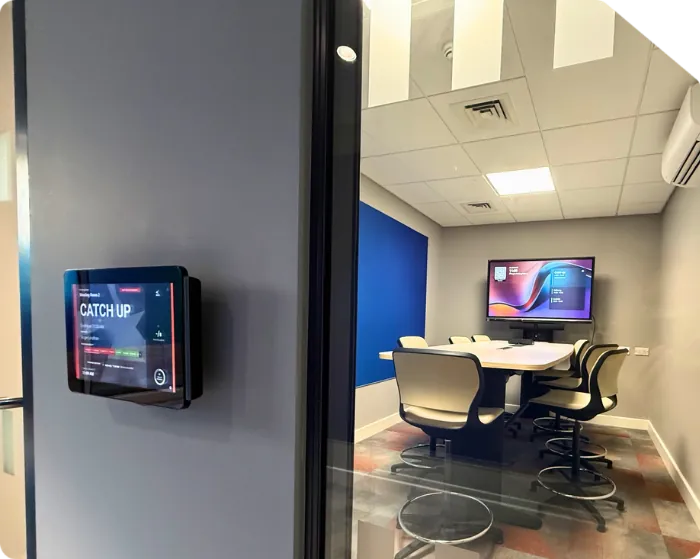
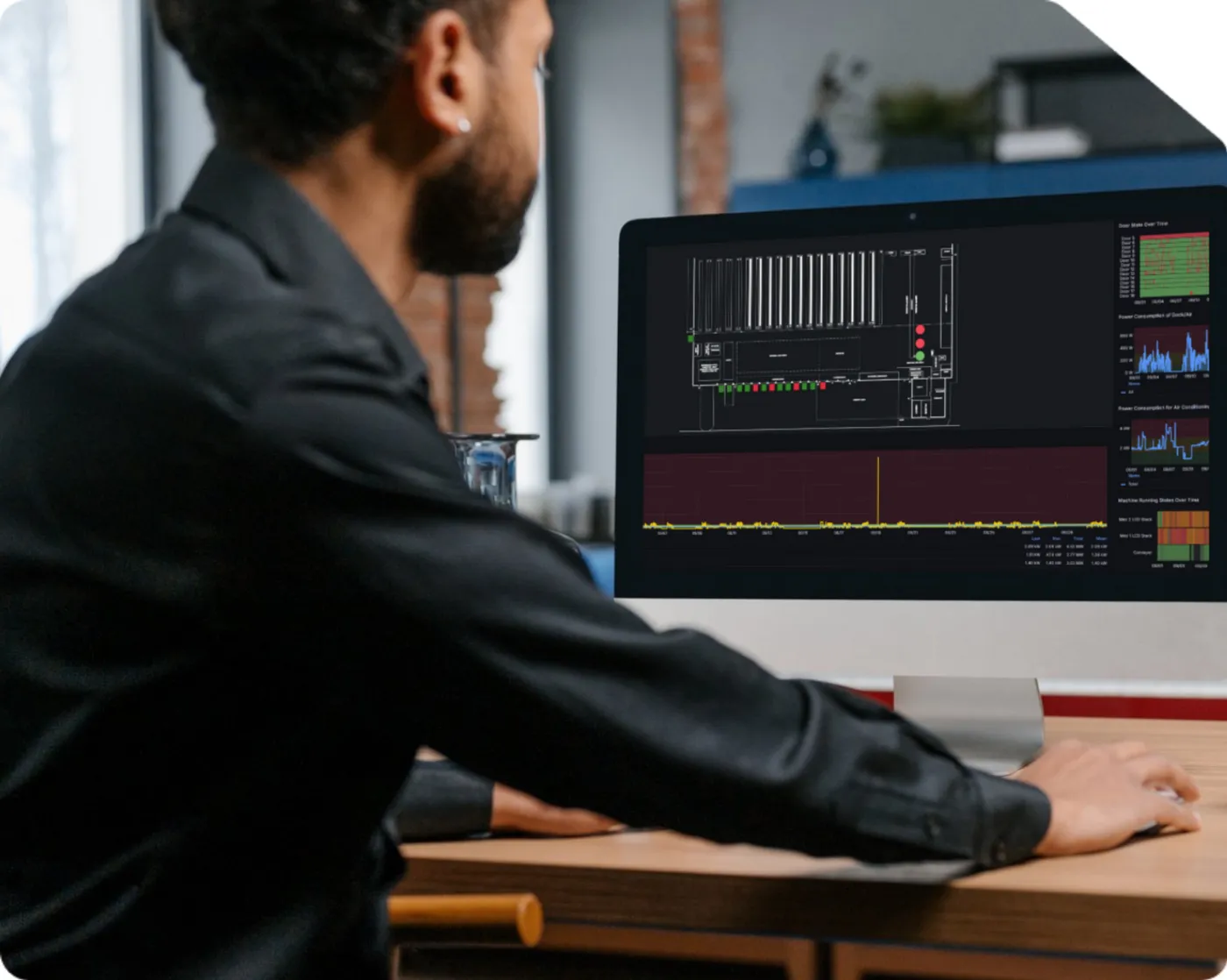
What smart building data reveals about space use and behaviour.
From day one, the Engine Room was designed to capture meaningful data, with room bookings, occupancy levels and environmental conditions monitored not to police behaviour, but to build a clearer understanding of how the space is actually used.
“We capture the data already. The challenge now is using it in the right way – educating people, not beating them with a stick.”
Over time, this data has highlighted patterns that would otherwise be difficult to see, including where rooms are under- or over-utilised, where spaces are booked for perceived rather than actual need, and how demand fluctuates throughout the day and week.
These insights are now informing discussions around smarter booking, better matching of spaces to requirements, and future automation — helping the college make more effective use of what it already has.
Behaviour change in meeting spaces across the college.
Perhaps the most significant impact of the Engine Room has been cultural.
Expectations around what a good meeting space looks like have shifted across Derby College Group, shaped by consistent, positive experiences rather than formal policy.
“People are disappointed now if they go into a room that doesn’t work like this.”
Hybrid meetings are no longer seen as a compromise, but as a standard way of working. Reliable audio and video are expected, and tools such as AI transcription and collaboration features are increasingly part of everyday meetings.
Even high-profile external events, inspections and leadership sessions are now planned around spaces that support effective collaboration, reflecting a broader change in how space is valued and used across multiple campuses.
Lessons for future education and smart building projects.
Looking back, the experience of the Engine Room has shaped how future investments are approached.
“If we were designing another one today, it would look very similar – and that tells you something.”
The learning from the project has reinforced the importance of designing for behaviour rather than trends, embedding technology as long-term infrastructure, prioritising integration over individual systems, and allowing data to inform gradual, cultural change rather than forcing it.
The Engine Room continues to act as both a functioning business centre and a reference point for future development, influencing how space, technology and user experience are considered across the college.
A smart building platform designed for long-term change.
Two years on, the Engine Room continues to operate as it was intended — supporting everyday activity, enabling collaboration and providing insight into how space is used over time.
Rather than relying on constant upgrades or redesign, the value of the project has come from embedding the right foundations from the outset. The technology continues to do its job quietly in the background, while the space itself has adapted naturally to changing needs.
The Engine Room remains an active reference point for future projects across the college, informing how space, technology and user experience are approached.