

What happens after the smart building project goes live
News & Insights
What Happens After the Smart Building Goes Live
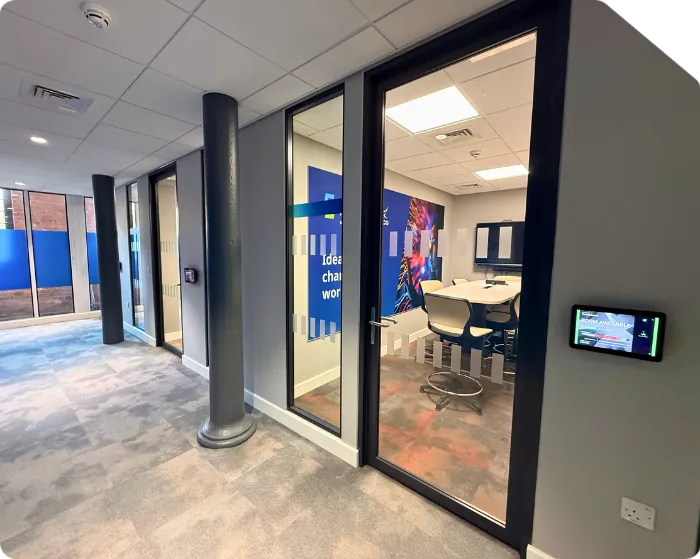
When the Derby College Business Centre first opened, success was measured in familiar ways. The technology worked, rooms could be booked, lighting adjusted automatically and hybrid meetings finally ran smoothly across campuses. From a delivery perspective, the project did what it set out to do.
What was less obvious at the beginning was how long it would take for the space to settle and how much of its real value would only become visible once people had time to adapt.
Published
Monday, 29th June 2026
Category
News & Insights
TAGS
Insights
Three years on, the Business Centre offers a useful reminder that smart buildings rarely deliver their full impact at handover. They do it gradually, through adoption, habit and behaviour.
When technology becomes part of the environment
As Ian McCormick, IT Director at Derby College Group, reflects:
“At the start, you’re focused on getting the space delivered.
Three years later, you start to understand what it’s actually changed.”
One of the clearest indicators of success is how naturally the Business Centre now supports day-to-day activity across the college. The lighting adjusts throughout the day in response to occupancy and time, hybrid meetings happen routinely and rooms are booked through familiar tools like Outlook and Microsoft Teams.
Most people don’t think about the technology behind it anymore. It has simply become part of how they expect the environment to work.
“People don’t really notice the lighting changing, it just feels right.”
Ian says.
That shift matters. Rather than becoming outdated, the technology has settled into everyday use in a way that feels consistent and dependable.
Designing spaces around how people actually work
From the beginning, the Business Centre was designed around clear intent. Different areas were created to support different types of activity, rather than trying to make every space do everything equally well. That approach has become more valuable over time.
“You can’t mix contemplation and collaboration and expect the space to work,”
Ian explains.
Creating clearer distinctions between focused work, meetings and informal collaboration has helped people understand how to use the environment more effectively. It has also influenced how other projects across the college are now approached. Conversations around new spaces increasingly start with questions about behaviour and purpose first, before moving into technology or layouts.
What space usage data looks like after three years
The Business Centre was designed to capture data from the outset, including room occupancy, environmental conditions and space usage. Over time, that information has become more useful as patterns have started to emerge. Rather than using data to monitor individuals, the college has focused on understanding how different spaces perform in practice and where adjustments may improve the experience.
“We already have the data,”
Ian notes.
“The challenge is using it to help people make better choices, not to call them out.”
That has helped highlight where some spaces are in consistently high demand, where meeting rooms may not always match the type of activity taking place and where expectations around technology have changed across the organisation.
How expectations around meeting spaces changed
One of the more noticeable changes has been how quickly reliable hybrid collaboration became expected rather than exceptional. Spaces that support good audio, video and connectivity are now often the preferred choice for meetings, events and external visits. In some cases, colleagues choose to travel between campuses specifically to use environments they know will work well. That consistency has gradually influenced expectations across the wider college estate.
“People are disappointed now if they go into a room that doesn’t work like this,”
Ian says.
What began as a dedicated employer engagement space has become a reference point for how collaboration environments are evaluated more broadly.
The value of seeing a project over time
Looking back, one of the most useful parts of the project has been having the opportunity to see how the environment performs after the initial launch period. The technology itself was delivered relatively quickly. Understanding how people would use the space, adapt to it and build confidence in it took longer. Some patterns only became visible once the Business Centre had become part of normal day-to-day activity.
“If we built another one today, it would look very similar.” Ian reflects
That consistency is important. It suggests the original design decisions were grounded in how people actually work, rather than short-term trends or novelty.
A space that continues to influence future projects
Three years on, the Derby College Business Centre continues to shape conversations around collaboration, technology and workplace design across the college. Not because it was intended as a showcase project, but because the environment has continued to work consistently over time. The experience has reinforced the value of designing spaces around behaviour, integrating technology carefully and allowing environments to evolve naturally as expectations change.
For other colleges and organisations considering similar investments, the lessons are less about adopting the latest technology and more about creating environments that people continue to choose to use long after the project has been delivered.


Interview: Three Years on Inside Derby College’s Engine Room
News & Insights
Interview: Three Years on Inside Derby College’s Engine Room.
This interview took place in the Derby College Business Centre during a visit from Magdalena Thackeray, Marketing Manager at Scenariio. Having previously only seen the Engine Room through video footage captured at the time of delivery, the visit offered an opportunity to experience the space in use three years on.
Published
Monday, 22nd June 2026
Category
News & Insights
TAGS
Insights
Ian McCormick, IT Director who led the original project at Derby College, reflects on how the Engine Room has evolved since its launch, how people now use it in practice and what the space has revealed about behaviour, technology and long-term value.
MT: If you had to summarise the value of the Engine Room in one sentence, what would you say?
Ian:
It depends on the audience, but for another college principal I’d say this: we’ve created a business centre environment that’s fit for purpose, sustainable, and genuinely attractive for employers to want to come in and work with us.
What matters most isn’t the technology itself, but what it enables. People want to be here — and that’s the real test.
MT: Has employer feedback changed since the space opened?
Ian:
Yes, and quite consistently. From the very start, employers commented on the quality of the environment, but what’s been interesting is how that feedback has turned into action.
At the opening, one of our local business leaders commented, unprompted, that he’d happily move his own offices into the space. That was telling. Since then, we’ve had organisations like Fujitsu (now FSAS) bring their entire senior leadership team to Derby College for events, using the Business Centre as their base for the day.
We also work regularly with large employers like Rolls-Royce plc, as well as smaller businesses around Pride Park and across that range the feedback is the same. People comment on how good the space is and many actively want to use it again.
MT: What impact has that had on relationships with employers?
Ian:
It’s given us focus. Before the Engine Room, engagement often meant us travelling out to different workplaces to gather feedback. Now, employers come to us.
That changes the dynamic. If people are willing to travel, it shows intent. It means they’re invested, they want to engage, and they want to help shape curriculum around real skills needs, whether that’s recruitment challenges or capability gaps further down the line.
MT: Looking back, was the investment justified from a leadership perspective?
Ian:
Absolutely. The project was originally funded through a skills development programme, with a specific requirement to demonstrate employer engagement. We exceeded that by a long way.
Beyond that, it’s created tangible outcomes: work placements, apprenticeships, employment pathways — a proper learner journey from education into industry. The benefits have been mutual.
From a delivery point of view, the project also worked because it was properly integrated. We worked with several partners — Scenariio, FSAS (a Fujitsu company), Top-Tec and internally we made sure it was all project-managed as one joined-up environment. You wouldn’t know multiple organisations were involved, and that was intentional.
MT: Has the Engine Room influenced how senior leadership thinks about space and technology?
Ian:
Yes, very much so. It’s changed the conversation.
Whenever we’re looking at refurbishments, new buildings or funding opportunities now, we start by asking: what is this space actually for? What behaviours are we designing for?
I’m a big advocate of separating contemplation, concentration and collaboration. Mixing those functions rarely works well. That thinking has carried into other projects across the college, including newer developments.
It’s also influenced how senior leaders use space. The Business Centre has become a default choice for hosting external visitors, senior meetings and events. Not because it’s branded as special, but because it consistently works.
MT: Have you seen changes in how people value the space over time?
Ian:
Very clearly. One of the strongest indicators is how far people are willing to travel to use it.
We’ve had colleagues and senior leaders choose to come here rather than use spaces on their own campus, because they know the meeting will work properly. When people are prepared to build travel into their day, it tells you the environment is removing friction rather than adding to it.
That wasn’t something we planned for, but it’s become one of the clearest signals of success.
MT: Are there areas where you’d like to make better use of data?
Ian:
Yes, particularly around space utilisation and acoustics.
We already capture data, but we’ve been careful about how we use it. The aim isn’t to police behaviour, but to encourage better use of the space over time. For example, understanding whether people are booking rooms that match their needs, or whether certain spaces are consistently under- or over-used.
Acoustics is another area. In open or transitional spaces, sound behaves in ways you don’t always anticipate, especially in older buildings. Having data to support decisions there, rather than relying on anecdotal feedback, would be valuable.
MT: Looking ahead, what would you do differently if you were designing this space again?
Ian:
Honestly, not a great deal. The flexibility of the Engine Room has been one of its biggest strengths.
If we’d been too prescriptive at the outset, we’d probably have had to redesign the space already. Instead, it’s adapted to how people actually work. The main difference now is that people understand these concepts better. Three years ago, it was much harder to explain how behaviour would change.
If we built another Business Centre today, I think people would want it to feel very similar to this. That’s a credit to how well the space has stood up over time.
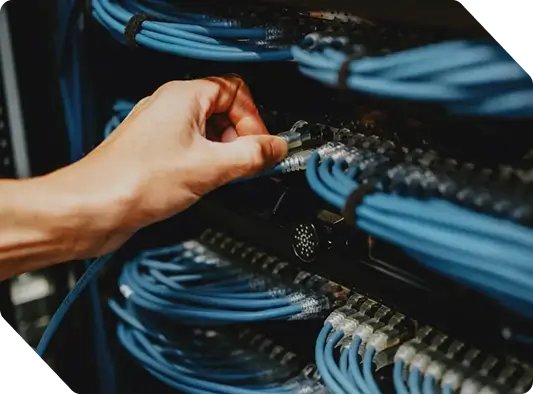
How we're reshaping Smart Building Experiences
News & Insights
Scenariio and smartengine are Reshaping Smart Building Experiences.
One Platform, One Interface, One Integrate: How Scenariio and smartengine Are Reshaping Smart Building Experiences.
Published
Friday, 3 October 2025
Category
News & Insights
TAGS
Insights
wtec and Scenariio are proud to hold a partnership built on shared values of innovation, integration, and intelligent building design.
This collaboration has helped clients achieve their sustainability and wellness goals by integrating real-time lighting, occupancy, and air quality data into building management systems. With up to 75% energy savings from lighting and up to a 34% reduction in total operating costs, smartengine optimises light levels and unlocks powerful building data, enabling day-two benefits through an open API.
Technology and Integration
smartengine’s low-voltage lighting platform goes beyond illumination, delivering real-time indoor air quality (IAQ) monitoring and motion data through its sensor network.
Scenariio integrates this data seamlessly into other building systems, empowering clients with actionable insights for healthier, more efficient spaces. By leveraging a single infrastructure for lighting, IAQ, and occupancy reporting, we simplify systems while enhancing building intelligence.
Supporting Wellbeing Indoors: Lighting for the Seasons
As we move into autumn and daylight hours decrease, indoor environments play an even greater role in supporting our wellbeing. Lighting quality and responsiveness can affect mood, focus, and sleep cycles.
smartengine enables human-centric smart lighting (HCsL) that mimics natural daylight to support circadian rhythms, boosting both wellbeing and productivity. By providing a multi-functional solution, smartengine supports healthier, more adaptable spaces.
Synergy with smartengine and Scenariio
To explore what this integration looks like in action, we invited Timothy Miscovich, Chief Commercial Officer at wtec, and George Pritchard, Technical Director at Scenariio, to share their insights on innovation, wellbeing and what’s next in smart building technology.
Timothy Miscovich: What excites you most about the future of smart building tech?
George Pritchard: I’m really excited about moving away from siloed, proprietary systems and into genuinely integrated building platforms where everything; lighting, HVAC, occupancy and air quality data works together in real time.
It means buildings won’t just respond, they’ll actually anticipate the needs of the people in them that day. That’s huge for wellbeing and for cutting waste. With the right IoT backbone, we can make smart buildings adaptive and genuinely intelligent.
TM: How does smartengine complement Scenariio’s solutions?
GP: smartengine gives us a sensor-rich, low-voltage infrastructure that delivers really detailed space-use data without adding complexity. It fits perfectly with how we work, using a building’s structured cabling network to bring together lighting, environmental monitoring and analytics in one system. The result is something that’s efficient but also very people-focused.
TM: What should building owners or facility managers consider when making their space smarter?
GP: The first thing is to start with “why”. Is it energy savings, ESG goals, wellbeing, or space optimisation? That should come before chasing whatever the latest gadget is. We’ve worked with smartengine for almost 15 years now and it’s tried, tested and proven.
Too many smart buildings fail because they’ve been fitted with untested products. Owners should be looking for solutions that can scale and still give flexibility for changes and upgrades in the future.
GP: How do you see AI and predictive analytics changing the way smartengine can anticipate what people need?
TM: There are already many strong platforms leveraging AI, machine learning, and predictive analytics to drive smarter outcomes. What makes smartengine unique is the quantity and quality of data it collects.
By feeding this data into these advanced platforms, outcomes can be significantly enriched, leading to even better performance than what we’re achieving today. Ultimately, this will make the management of spaces and buildings more efficient, cost-effective, and seamless for the people responsible for them.
GP: In your experience, what’s the biggest improvement clients notice straight after installation?
TM: This depends on the type of installation. In retrofit projects, the most immediate impact is often noticed by the end users of the space, drastically improved lighting quality, along with the benefits of per-fixture daylight harvesting and task tuning.
In new construction projects, the best outcome is when the system operates so smoothly that occupants don’t even realize it’s there. Instead, it’s the facilities and operations teams who quickly see the advantages: a lighting system that runs reliably, provides best-in-class data for analytics, and delivers substantial energy savings across both lighting and HVAC.
GP: With the growing focus on ESG and wellbeing, where do you think building priorities will be in the next few years?
TM: I believe we’ll see a significant shift toward upgrading “normal” or existing buildings with smart and sustainable technologies, ensuring they are not left behind as standards rise.
For buildings that already have advanced systems in place, the next priority will be deeper integration, expanding analytics capabilities and monitoring new categories of data points that are not commonly tracked today. This evolution will allow buildings to not only meet ESG goals but also actively support occupant wellbeing in smarter, more holistic ways.
Looking Ahead
By combining Scenariio’s integration expertise with smartengine’s real-time sensor platform, we’re making buildings that are not only smart – but intuitive, healthy and ready for future demands. As we approach the darker months, the opportunity to design for light, air, comfort and connectivity becomes more important than ever.
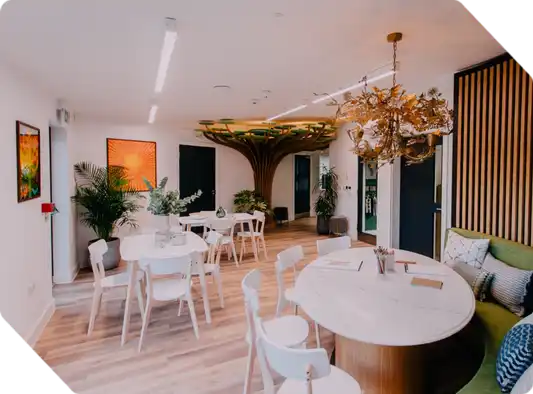
Human-Centric Lighting and Smart Buildings
News & Insights
Lighting for Life: What Treetops Hospice Taught Us About Human-Centric Buildings.
In 2023, Treetops Hospice in Derbyshire became part of a BBC DIY SOS project that brought together companies from across the UK with a shared purpose: to create a space that genuinely supports the people inside it.
Published
Wednesday, 3rd September 2025
Category
Insights
TAGS
SMART LIGHTINGSMART BUILDING SENSORS
INSIIGHT WORKPLACE ANALYTICS PLATFORM
Scenariio worked alongside wtec to deliver a smart, human-centric lighting system at Saplings House, the hospice’s dedicated area for bereaved children.
What began as a contribution to a charitable project became a powerful demonstration of how intelligent environments can directly influence wellbeing. And the lessons extend far beyond healthcare.
Serving Patients Through Better Light and Air
In a hospice environment, small details have a profound impact. The atmosphere of a room can affect stress levels, mood and overall comfort for both patients and staff.
Light plays a direct role in human health, mood and performance. Its impact is relevant anywhere people spend time indoors. Melatonin, cortisol and serotonin all respond to the light we are exposed to, influencing alertness, energy and emotional state.
In the early 2000s, scientists discovered specialised light-sensitive cells in the eye that send information to the suprachiasmatic nucleus, the brain’s “master clock” that regulates daily rhythms across the body. This breakthrough laid the foundation for Human-Centric Lighting, which supports natural circadian rhythms rather than working against them.
At Treetops, the lighting adapts throughout the day:
- Brighter, blue-enriched light in the morning to promote alertness.
- Warmer light later in the day to encourage rest.
- Stable, flicker-free illumination to reduce the likelihood of headaches and migraines.
Staff can adjust lighting scenes via a mobile app to suit individual needs or sensitive situations, ensuring the environment remains calm and supportive.
Air quality is monitored in parallel. Sensors embedded in each luminaire measure CO₂, particulate matter, temperature, humidity and VOC levels. Research from Harvard University has shown that elevated CO₂ can impair concentration and decision-making. At Treetops, if CO₂ levels rise, the system signals ventilation automatically. The technology operates quietly in the background, maintaining a healthy environment without disrupting care.
At the heart of the installation is the wtec smartengine, an intelligent remote driver delivering low-voltage power and control over PoE cabling. It creates a mesh sensor network across the building, feeding real-time data into the Building Management System so that HVAC and lighting respond dynamically without manual intervention.
What This Means Beyond Healthcare
While the project was rooted in hospice care, the challenges it addressed are not unique to healthcare.
Poor lighting remains one of the most common workplace complaints. Many offices, warehouses and schools operate in windowless or poorly daylit environments. The symptoms are familiar:
- Frequent headaches or eyestrain.
- Harsh glare or visible flicker.
- Afternoon energy crashes.
- Low mood during darker months.
- Gloomy spaces that never feel comfortable.
- Teams relocating to find better light.
These are often accepted as part of working life. In reality, they are signs that the environment is not aligned with human biology.
Lighting that remains the same intensity and colour throughout the day ignores how our bodies naturally respond to light. Combined with poor ventilation, it can leave people fatigued, disengaged and less productive.
From Smart Lighting to Intelligent Buildings
The technology installed at Treetops does not stop at lighting.
Through Insiight, Scenariio’s Smart Building IoT platform, lighting, air quality, energy use and asset data are unified into a single, live view of building performance. This removes the silos common in traditional systems and gives facilities teams clear, actionable insights.
Instead of reactive maintenance and guesswork, organisations gain:
- Real-time visibility of occupancy and utilisation.
- Evidence-based decisions on energy optimisation.
- Clear reporting to support sustainability targets.
- A low-voltage, digitally managed infrastructure that reduces reliance on traditional electrical reconfiguration.
The result is a building that actively supports wellbeing while also lowering operating costs and environmental impact.
A Broader Lesson
The Treetops Hospice project demonstrated something simple but powerful: when buildings are designed around people rather than systems, both wellbeing and performance improve.
Human-Centric Lighting is no longer a niche healthcare concept. It is a practical, scalable approach for any organisation that wants to create healthier, more productive and more sustainable spaces.
If your workplace struggles with glare, fatigue, energy waste or a lack of usable building data, it may not be the people who need adjusting, it may be the environment. With the right infrastructure, your building can do more than function. It can actively contribute to the wellbeing and performance of everyone inside it.
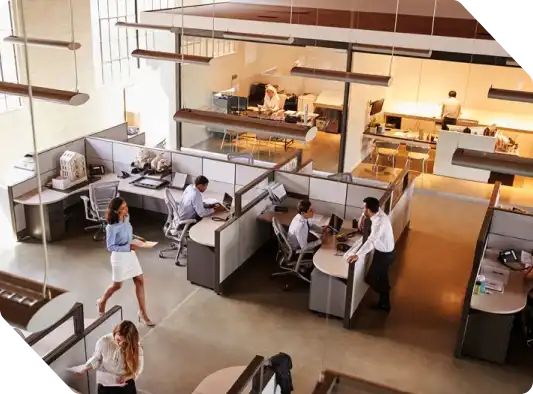
Creating a "Destination" Premise to Lure Staff Back
News & Insights
Creating a "Destination" Premise to Lure Staff Back.
Companies are transforming their premises into “destinations” using technology and human-centric design in a bid to attract people back into the workplace, according to a Midlands property refit expert.
Published
Thursday, 14th September 2023
Category
News & Insights
TAGS
News
Penny Mitchell, from UK fit-out and refurbishment specialists Overbury, says high-tech devices such as movement sensors, human-centric LED lighting and flat screen displays are increasingly in demand from clients as they look to bring staff back into the office following COVID.
Penny is one of a number of industry experts who have been lined up to take part in a Workplace Technology Conference, which will be hosted by Derby smart building firm Scenariio and held at the Chocolate Factory, in Siddals Road, on September 21. She will be taking part in a round table event looking at how technology can help reverse the working-from-home trend at the conference, which is free and aimed at property owners, architects, landlords and developers.
Overbury is one of the country’s foremost fit-out and refurbishment companies and its previous projects include a refurbishment project for the European Bank for Reconstruction in London’s Canary Wharf and the Victorian Citadel building in Corporation Street, Birmingham. It also recently won the contract to complete Nottingham City Council’s new Central Library, which is part of the new Broad Marsh car park and bus station complex.
Scenariio’s conference, which will explore a wide range of technology including sensors, LED lighting and AV equipment, comes in the wake of news that US video conferencing giant Zoom – whose technology made remote working possible during lockdown – was struggling to get its staff to return to the workplace.
They are far from the only ones, says Penny, who is a business development manager at Overbury’s Central office, based at Fort Dunlop in Birmingham.
She said:
“Technology matters to our clients because, post-COVID, they’re trying to make their offices a destination in order to get everybody working back in the office.
“Smart building technology can help them achieve that because it can give staff the experience they have at home. If premises don’t have the ability to set up their laptop anywhere, for example, or the air quality isn’t good enough, they won’t return.
“Technology can also help companies monitor their energy usage to ensure they meet their sustainability targets but it can’t just be retro-fitted.
“Companies need to put workplace technology at the heart of their thinking at the design creation stage, which is why an event such as this conference, which raises awareness of what’s out there, is so useful to our industry.”
Among the other experts who have agreed to take part in the event are Adrian Hayes, sales director of UKI Commscope, Alex Klein, managing director of smartengine wtec, Daniel Floyd, principal engineer at engineering consultants Cundall, and Dee Panchall, IOT specialist at Cisco Meraki.
Rob Pritchard, managing director of Scenariio, said:
“Penny is just one of a long list of extremely well-regarded professionals we’ve invited to take part in what’s shaping up to be a fascinating and well-attended event.
“It will showcase the very latest thinking and equipment to enable anybody who is involved in upgrading premises or relocations to understand what is available to help them achieve their plans.”
Established in 2013, Scenariio has installed smart building technology, including intelligent lighting, integrated and supplementary sensor networks and audio-visual systems, at premises across the UK.
Its clients include Gymshark, Severn Trent Water and Tarmac, as well as, closer to home, Derby College and the popular Bustler Market street food venues in Derby and Nottingham.
The event starts at 10am and will be followed at 5pm by an evening at Bustler Market, including karaoke, arcade games and a silent disco. For more information and to book your place visit https://www.workplacetechnology.io/

Scenariio Helps Street Food Business Growth
News & Insights
Scenariio Helps Street Food Business Growth.
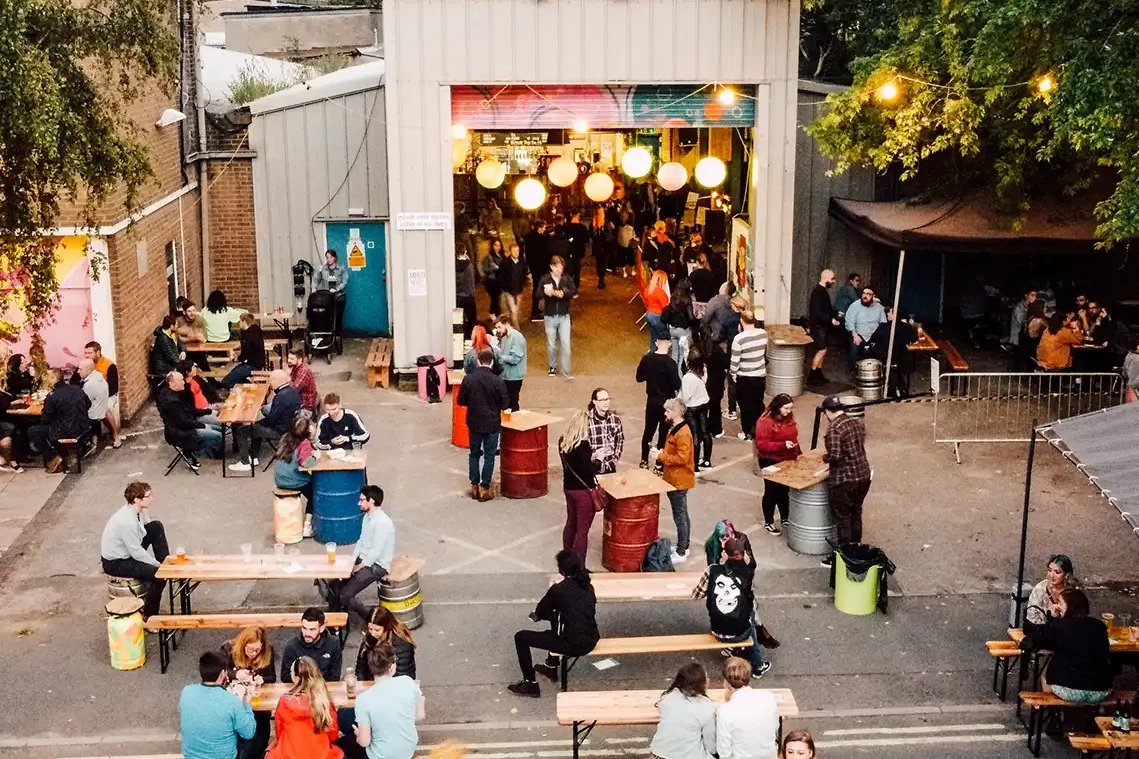
Street food venue Bustler, based in in Avenue E at Sneinton Market, says it plans to add more equipment to its existing IT monitoring system, which transmits up-to-the-date operating data such as ambient temperature, air quality, light levels and numbers of people on site.
Published
Wednesday, 31st May 2023
Category
News & Insights
TAGS
News
The company has operated its current outlet since October 2022 and is now expanding into a second unit next door, which will feature permanent kitchen space for three independent operators as well as an intimate espresso and wine bar.
Ever since Bustler was established in Derby in 2013, it has pioneered the use of smart building technology in conjunction with fellow Derby IT firm Scenariio, with which it was recently shortlisted in the Best Use of Technology category of the Restaurant Marketer and Innovator Awards earlier this year.
Both of Bustler’s Nottingham and Derby venues are bristling with human movement sensors, intelligent lighting systems, temperature monitors and CCTV cameras to give its operators an instant snapshot of what’s going on inside the venue at any one time.
It means that, just by looking at their phone, they know how many people are in the venue at one time, whether it is too cold or too hot and what the most popular areas within the venue are.
The lighting is also automatically adjusted to dim or switch off lights in areas that are not in use, or increased throughout the evening as the daylight outside fades.
Olivia Pritchard, managing director of Bustler, says the equipment helps her and her team to run a tight ship at both venues, adding that the lessons learned from the data in Derby has influenced the design and lay-out of Nottingham.
She said: “Running a venue like ours is a complex business and the data we receive from the technology is genuinely useful, not least because we don’t need a member of staff with a clicker on the door to monitor how many people are inside.
“That’s an instant saving, while it also ensures that no lights get left on overnight, so we save on energy as well. We will be installing mainly CCTV in the second phase but there is no doubt that the operational data from Derby and Nottingham has helped us to imagine the new space and will help us when it’s up and running.”
Scenariio’s technology is increasingly in demand from companies looking to use smart technology to help reduce operating costs and former clients include Gymshark, Severn Trent Water and Tarmac.
Tom Erskine, the company’s business development manager, said: “The hospitality sector is undergoing big operating challenges at the moment and although the equipment we supply does require an investment, it pays dividends in the long run.
“Bustler is definitely one of our success stories. Olivia and her team have been able to use the technology to save money and energy and to really understand their venues and how they are used from their customers’ point of view.”